Book A Call

Turn Your TEDx Talk (or keynote) Into Strategic Content
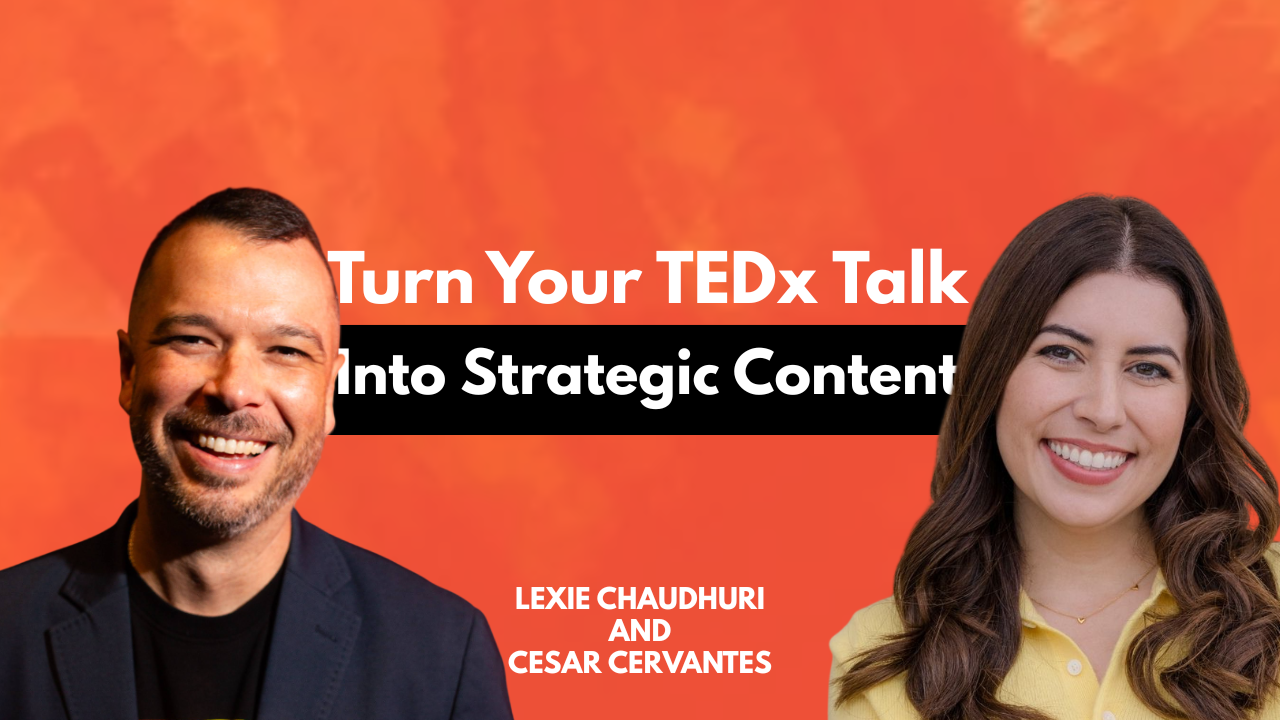
I just wrapped a conversation (video below) with Lexie Chaudhuri, PR consultant and communication strategist, about something most speakers completely overlook after stepping off stage.

Your TEDx talk or keynote isn’t just a performance.

It’s one of the most powerful earned media and brand-building assets you’ll ever have—if you know how to use it strategically.

If you’ve ever wondered how to turn your talk into visibility, media attention, and long-term credibility without sounding promotional or forced, this is one of those conversations worth paying attention to.

Let’s break it down...


1. Your TEDx Talk Is More Than Content, It’s Narrative Ownership

That distinction matters more than most speakers realize. Unlike an interview or news feature where someone else ultimately shapes the narrative, your talk gives you complete ownership over your message, perspective, and personal story. It becomes a space where you decide what gets emphasized, what gets left out, and how your ideas are understood.

And while earned media can absolutely amplify your credibility, your TEDx talk serves a different purpose. It becomes the place where your voice remains fully yours—unfiltered and intentional. Which means it’s not just a speech or speaking credential. It’s your narrative platform.


2. Earned Media Starts With Audience, Not Promotion

A lot of people approach media backwards.

They start by asking, “How do I get featured?”

Lexie flips that thinking entirely. From her perspective, earned media does not begin with pitching yourself or pushing your message—it begins with understanding the audience you’re trying to reach. What are they already reading? What conversations are they already paying attention to? And what problems or perspectives matter to them right now?

That shift changes everything. Whether you’re trying to reach journalists, business leaders, or consumers, visibility is rarely created through self-promotion alone. It’s created through relevance. The stronger your understanding of the audience, the stronger your positioning becomes.


3. Authenticity Wins, But Strategy Still Matters

Authenticity gets talked about constantly.

But Lexie gave it practical structure.

She explained that strong communication is not simply about being vulnerable or sharing your story—it’s about doing so intentionally. The stories that resonate most are often personal, thoughtful, and grounded in real perspective, but they also serve a purpose beyond self-expression.

That distinction matters because authenticity without direction can quickly become noise. Your story should reflect who you are while still creating value for the people you’re trying to reach. And that balance—between honesty and strategy—is where meaningful communication lives.


4. Not Every Trending Story Needs Your Commentary

One of the more nuanced parts of the conversation centered around visibility and timing.

More specifically, the temptation to insert yourself into conversations simply because they’re trending.

Lexie was refreshingly direct about this. Just because a story is getting attention does not automatically mean your brand belongs in the middle of it. There’s a difference between contributing meaningfully and forcing relevance—and audiences can usually tell the difference.

The strongest communicators are not chasing every headline or trying to make every story about themselves. They show up thoughtfully, contribute when they have something meaningful to add, and understand that credibility is built through discernment just as much as visibility.


5. Journalists Don’t Need More Pitches, They Need Better Relationships

This part pulled back the curtain on PR in a way most people rarely hear.

Newsrooms are shrinking. Reporters and editors are managing enormous volumes of outreach while balancing deadlines and competing priorities. Which means silence does not automatically mean rejection—and sometimes a strong story simply lands at the wrong moment.

Lexie’s advice was simple but strategic: start by understanding the people you hope to reach. Read the publications. Learn the journalist’s beat. Follow their work. Engage with what they’re already writing about before asking for anything in return.

Because media relationships work like any other relationship.

Trust comes before opportunity.


6. LinkedIn Is Becoming a Serious Visibility Channel

The conversation also moved into platform strategy—and LinkedIn came up repeatedly.

Not because it’s trendy, but because it’s increasingly becoming a place where professionals, thought leaders, and media contacts intersect. For speakers especially, that creates a powerful opportunity to build visibility and credibility in one place.

But Lexie also made an important distinction.

More content does not automatically mean better content. As platforms become flooded with AI-generated material and recycled opinions, originality becomes increasingly valuable. People are not looking for polished perfection or generic thought leadership. They’re looking for perspective.

And your voice still matters.


7. Stop Chasing Algorithms and Start Curating Intentionally

So many people feel trapped trying to keep up with shifting algorithms—more posts, more engagement, more tactics, more pressure to constantly stay visible. But Lexie encouraged a different approach.

Curate first.

Build a feed that supports your goals, your energy, and the kind of conversations you actually want to participate in. Follow intentionally, engage meaningfully, and share when you genuinely have something worth saying.

Because sustainable visibility does not come from exhausting yourself trying to win an algorithm.

It comes from building consistency around what already feels authentic to you.


8. The Bigger Shift: From Speaker to Strategic Communicator

Your talk should not be the finish line.

It should be the starting point.

A TEDx talk or keynote becomes exponentially more valuable when you stop viewing it as a one-time moment and start treating it like a long-term communication asset.

The speakers who create the most momentum aren’t simply delivering talks.

They’re building ecosystems around their ideas.

And that changes everything.


And if you're ready to write, land and deliver your TEDx talk or keynote speech, schedule a call with me here!

Subscribe to our newsletter
Stay in touch